+91-808 8919 888

 CX
CX  March 16, 2025
  3 mins read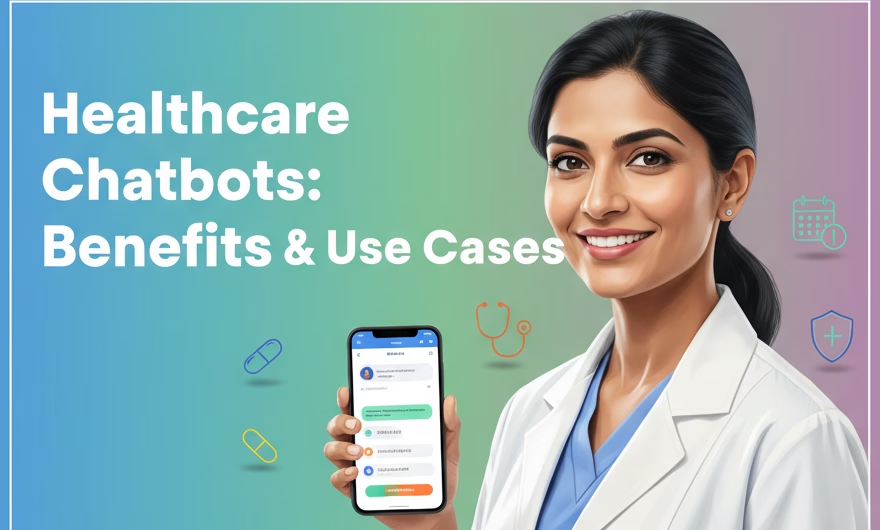






Access to healthcare has always been essential. However, the need for quick and convenient medical support has become even more pressing in recent years. Patients expect immediate access to information and care, regardless of where they are or what time it is. This growing demand has pushed the healthcare industry to adopt smarter, more efficient solutions to keep up.
Healthcare chatbots have emerged as an essential solution in this space. They are powered by conversational AI and enable patients to reach medical professionals for immediate responses to their concerns.
Chatbots provide a faster, more accessible alternative to traditional methods that require patients to wait on hold or fill out lengthy forms. Beyond offering quick answers, they also handle repetitive tasks and provide 24/7 support, ensuring that patients get the help they need when they need it most.
Let’s dive deeper into the key benefits of chatbots for the healthcare industry.
Key Benefits of Healthcare Chatbots
AI-driven chatbots can transform how hospitals and healthcare providers interact with patients. They can help improve patient engagement and streamline administrative tasks to make healthcare more accessible and efficient.
Here are some of the key advantages they offer:
1. Patient Updates and Reminders
Chatbots help patients stay on track by sending regular notifications about upcoming appointments, medication schedules, and follow-ups. They can also share personalised health tips and provide quick answers to common questions. This ensures patients don’t miss critical steps in their treatment plans and feel supported throughout their healthcare journey.
2. Trust Building Through Reliable Support
Consistency and quick responses play a major role in building patient trust. Chatbots are available 24/7 to handle inquiries, ensuring patients are never left without assistance. Immediate responses to questions about symptoms, treatments, or hospital services can make patients feel valued and cared for.
3. Patient Engagement and Data Management
Maintaining patient records and tracking medical history is a must for effective treatment. Chatbots simplify this process by logging patient interactions, storing data from previous conversations, and ensuring doctors have easy access to a patient’s medical history. This helps doctors make informed decisions quickly and reduces the chances of miscommunication or gaps in care. Patients also feel more engaged when their health journey is tracked and personalised.
4. Efficient Query Handling
Healthcare providers often face a surge of repetitive questions about hospital hours, services, or basic medical advice. Chatbots handle these routine inquiries and allow human staff to focus on more complex cases. This reduces patient wait times and increases the efficiency of the support team. In emergency situations, chatbots can also provide immediate guidance based on patient symptoms, ensuring timely action when it matters most.
Essential Use Cases of Healthcare Chatbots
Healthcare chatbots have redefined how medical facilities engage with patients and manage operations. They simplify complex processes, improve patient satisfaction, and reduce administrative burdens.
Here are some key use cases of healthcare chatbots:
1. Appointment Scheduling and Reminders
Managing appointments is one of the most challenging aspects of healthcare administration. Even with scheduling systems in place, patients often face difficulties navigating them, leading to missed or cancelled appointments.
A well-designed chatbot can simplify this by asking patients about their health concerns, matching them with the right physician, and presenting available time slots. Patients can easily schedule, reschedule, or cancel appointments through the chatbot, which also sends automated reminders to minimize no-shows and improve overall scheduling efficiency.
2. Patient Data Collection and Management
Chatbots streamline the task of gathering patient data by collecting basic information, such as the patient’s name, contact details, symptoms, medical history, and insurance details through a simple conversation. This data can be automatically stored in the hospital’s system, making it easier for doctors to access patient records, track symptoms, and personalise treatments. This also reduces the time patients spend filling out paperwork during visits.
3. Quick Response to Common Questions
Patients often have similar questions about hospital services, operational hours, costs, and procedures. Live chat solutions can handle these repetitive queries efficiently, providing instant answers to questions like:
- What are the hospital’s working hours?
- What documents are needed for admission?
- How much will be covered by insurance?
- What are the available payment options?
This reduces the burden on support staff and ensures patients get quick, accurate information without waiting.
4. Support for Insurance-Related Queries
Processing insurance claims and billing can be complicated for patients. Chatbots simplify this by providing information about insurance coverage, processing claims, and clarifying billing details. When integrated with automation tools, chatbots can also help with claims submission and status tracking, ensuring patients stay informed about their financial obligations without needing to contact support staff repeatedly.
5. Patient Feedback and Service Improvement
Chatbots make it easy for patients to share their experiences through automated follow-ups and feedback forms. This allows hospitals to understand patient satisfaction levels and identify areas for improvement. Real-time feedback helps healthcare providers enhance patient care and fine-tune their services to meet patient expectations better.
Conclusion
The integration of chatbots in healthcare is a step towards creating a more accessible, responsive, and patient-centric ecosystem. Medical institutions can offer faster support, improved communication, and enhanced care delivery by combining conversational AI with healthcare services.
As the healthcare sector continues to evolve, adopting smart solutions like AI chatbots will help meet patient expectations while ensuring efficient operations. So, define your expectations and get started with introducing AI chatbots to your system/team!

A marketing automation enthusiast at Exotel, passionate about building data-driven workflows that power smarter customer engagement. I bridge the gap between marketing and technology turning campaigns into scalable, automated systems that drive real business impact. When I’m not optimizing lead funnels or setting up automation flows, you’ll find me writing about customer experience, martech trends, and the future of communication on the Exotel blog.