



For years, businesses have met their customers where they are—on WhatsApp. But until recently, this interaction was largely silent, confined to text chats and media sharing. If a customer had a complex issue or an urgent query, they had to leave the app, dial a phone number, and often restart the conversation from scratch.
That era of broken journeys is ending.
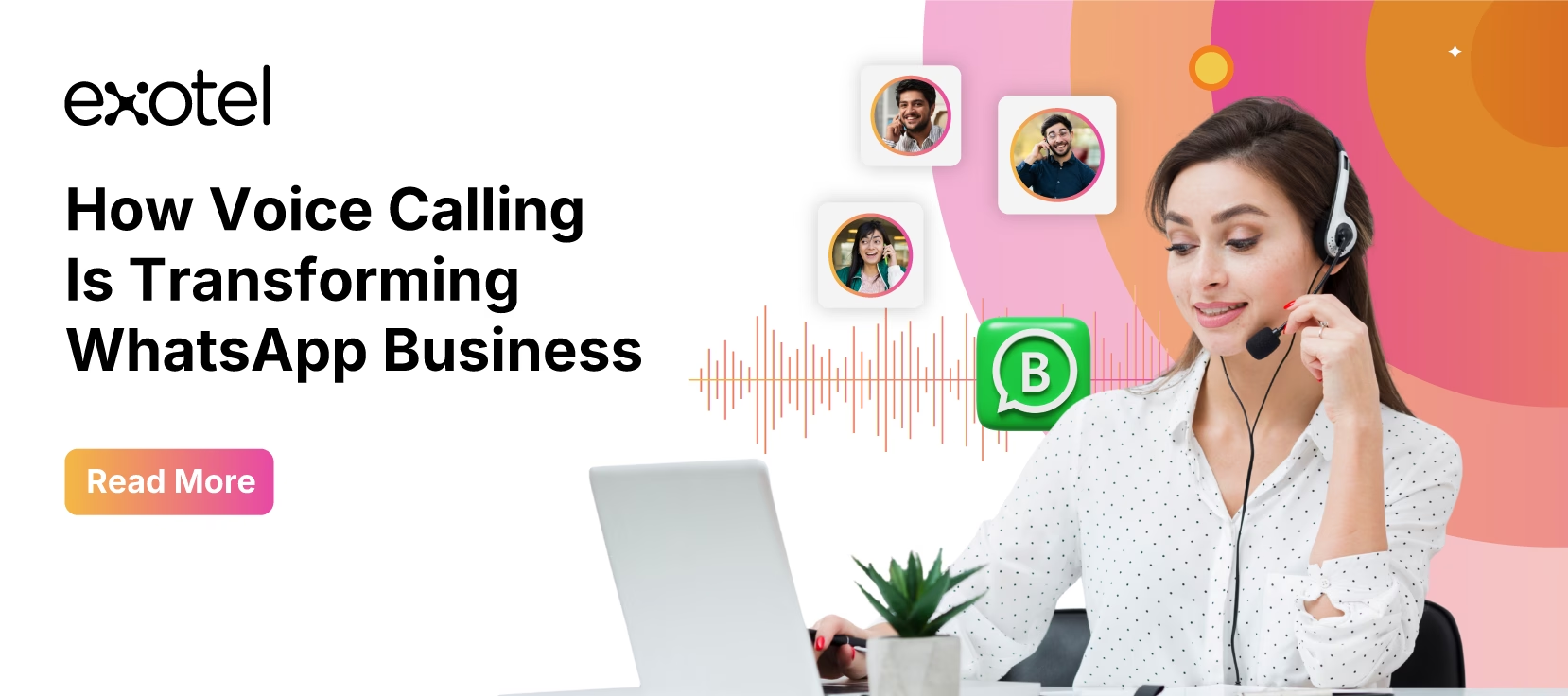
With the latest WhatsApp Business Platform Voice Calling features, Meta has bridged the gap between chat and voice. And at Exotel, we are taking this a step further. By integrating our enterprise-grade Voice Contact Center and IVR flows directly into WhatsApp, we are enabling a true, seamless omnichannel experience.
Here is why this matters and how your business can leverage it today.
The Shift: Why Voice on WhatsApp is the New Standard
The interest in WhatsApp calling isn’t just a trend; it’s a shift in consumer behaviour.
- Unmatched Reach: With over 2.8 billion active users globally, WhatsApp is the default communication tool for the world.
- High Visibility: WhatsApp messages have open rates as high as 98%. Bringing voice into this high-engagement channel ensures your calls actually get noticed—and answered.
Consumer Preference: Users prefer staying in one app. Recent data suggests that over 60% of consumers want the ability to switch from chat to voice instantly without changing platforms.
How It Works: Two-Way Voice Communication
Exotel is actively developing and supporting both inbound and outbound calling capabilities on WhatsApp, transforming how you connect with your audience.
1. User-Initiated Calling (Inbound)
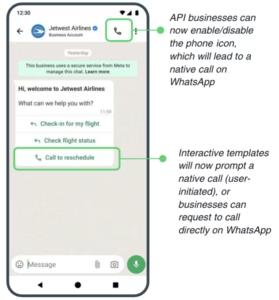
The familiar “Call” button—previously reserved for friends and family—is now available for businesses.
- The Workflow: A customer is chatting with your support bot or agent about a complex issue. Instead of typing out a long explanation, they simply tap the “Call” button within the chat.
- The Exotel Advantage: This call doesn’t just ring a random phone. It routes through Exotel’s Voice Contact Center. You can deploy your existing IVR flows (“Press 1 for Support, 2 for Sales”) directly onto the WhatsApp call leg. The call is then routed to the right agent, who receives it with full context from the chat history.
2. Business-Initiated Calling (Outbound)
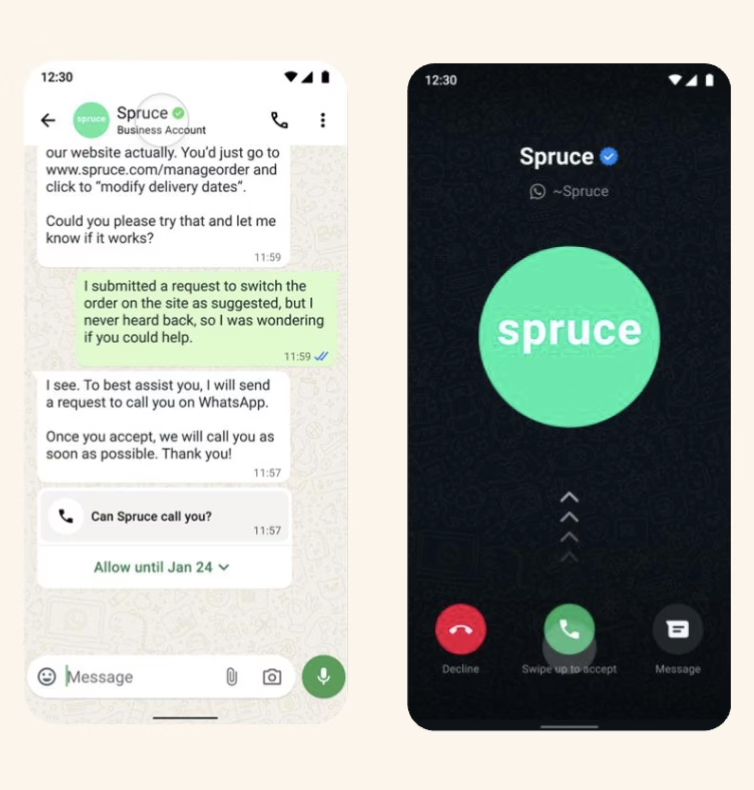
Currently this feature is in the development stage, using this feature you can initiate calls to your customers directly through WhatsApp (subject to user permission).
- Lead Generation: Imagine sending a marketing campaign for a high-value product. When the customer engages, your sales team can trigger a call instantly while the lead is “hot.”
- Trust & Pickup Rates: Unlike standard phone calls which often appear as “Spam” or unknown numbers, WhatsApp calls display your Verified Business Name and logo. This transparency significantly boosts call pickup rates.
Solving Key Business Challenges
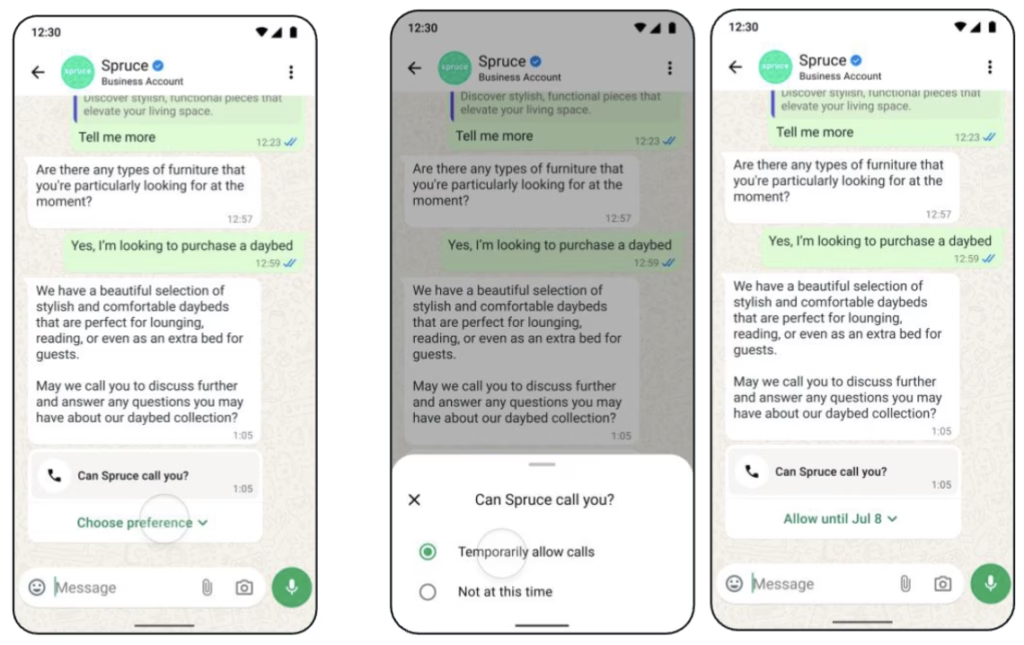
- Customer Consent & Control: One of the biggest hurdles in outbound calling is intrusiveness. WhatsApp solves this by putting the control firmly in the customer’s hands. Before a business can initiate a call, they must send a Call Permission Request.
- The “Enable” Option: Customers receive a simple prompt asking if they want to allow calls from your business. They can choose to “Allow” (granting permission) or “Decline.”
- Flexible Permissions: Customers can even choose between a Temporary Authorization (e.g., valid for 7 days to resolve a specific ticket) or a Permanent Authorization for ongoing relationships. This explicit “opt-in” model builds immense trust, ensuring your calls are welcomed rather than blocked.
- True Omnichannel Support
Complex queries often have a high turnaround time on chat. By allowing a seamless switch to voice, you can resolve issues faster. Agents handle the call and the chat in a single conversation window on the Exotel dashboard, eliminating data silos.
- Cost-Effective International Support
For businesses with a global customer base, international voice support is traditionally expensive due to telecom roaming charges. WhatsApp calling utilizes VoIP (Voice over Internet Protocol). This means you can offer voice support to a customer traveling in Brazil or a client based in Dubai without incurring heavy international telephony costs.
- Enabling Voice for “Roaming” Customers
Customers traveling outside their home country often keep their phones on “Flight Mode” and rely on Wi-Fi. Traditional calls won’t reach them, but a WhatsApp call will. This ensures you remain accessible even when your customer is off the cellular grid.
Getting Started with Exotel
To enable the WhatsApp Business Calling API (Beta), the business-side leg must be on VoIP. Exotel makes this transition effortless:
- VoIP Integration: We bring VoIP directly into your ecosystem via our platform APIs and SDKs for Android, iOS, and Web.
- Full Stack Features: All your essential contact center features: Call Recording, Reporting, Supervisor Monitoring, and Analytics—are intact and extended to WhatsApp calls.
The Future is Vocal
We are witnessing the convergence of telecom and big tech. The ability to make outbound calls and receive inbound inquiries on the world’s most popular app is not just a “feature”—it is a competitive advantage.
Early adopters who integrate voice into their WhatsApp strategy will benefit from higher engagement, lower costs, and a customer experience that feels effortless.