+91-808 8919 888

 CX
CX  February 11, 2025
  5 mins read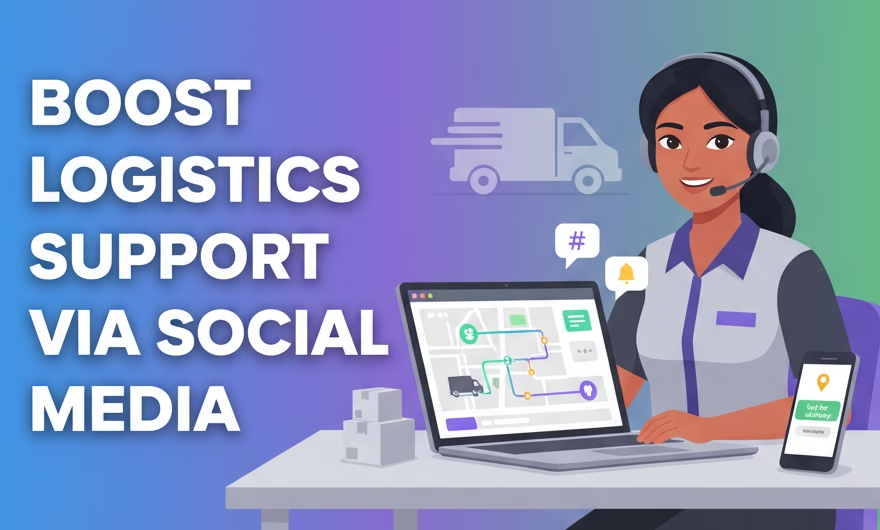






How Social Media Impacts Customer Service in Logistics
Introduction
Social media has transformed how logistics brands communicate during the most critical moments of the customer journey—when an order is placed, in transit, delayed, or delivered. For shippers, 3PLs, carriers, and eCommerce-led businesses, it offers a fast, public, and mobile-first customer service window. As of 2024, billions of people use social platforms daily, and many turn to them first for updates and support when shipments don’t go as planned. In a sector where trust is built on timely, accurate information, social media can elevate customer satisfaction, protect brand reputation, and reduce inbound pressure on traditional channels.
Used well, social care complements voice, email, and chat by offering immediacy, transparency, and a human touch at scale. It also surfaces real-time signals—sentiment, recurring bottlenecks, and geographic patterns—that help operations teams act before issues escalate.
Social care offers immediacy, transparency, and a human touch at scale—precisely when logistics customers need it most.
Benefits of Social Media in Logistics Customer Service
- Immediate Response: Social channels allow logistics teams to acknowledge issues quickly, even before a full resolution is available. A prompt “we’re on it” paired with a move to direct messages for account details reassures customers and sets clear expectations. This immediacy reduces frustration and prevents duplicate contacts across channels.
- Transparency and Visibility: Public interactions on platforms like X (formerly Twitter), Facebook, and Instagram highlight a brand’s service standards. When customers see professional, empathetic responses and timely follow-ups, it builds confidence. For large disruptions (weather events, customs delays, network outages), a pinned post or thread centralizes information and reduces repetitive queries.
- Personalized Interaction: Social media makes it easier to deliver context-rich support. With the right integrations, agents can pull order status, delivery attempts, and return labels directly into the conversation, then tailor solutions—rescheduling a delivery, confirming pickup windows, or sharing a locker option—without asking customers to repeat themselves.
- Proactive Service: Proactively posting route impacts, cut-off times, and holiday surcharges reduces “where is my order?” (WISMO) contacts. Proactive DMs to affected customers—linking to live tracking or a self-serve reschedule flow—turn potential escalations into smooth experiences.
- Community Signal for Operations: Aggregated comments and mentions expose systemic issues (e.g., delays at a specific hub, packaging failures for fragile SKUs). Feeding these insights to operations, planning, and vendor teams helps fix root causes faster.
- Cost-Efficient Triage: Not every inquiry needs a phone call. Social care can triage simple questions—delivery windows, POD availability, returns steps—freeing agents to focus voice time on complex exceptions and B2B escalations.
Challenges and Opportunities
Social media service in logistics is powerful but unforgiving. The same public stage that builds trust can amplify missteps. Key challenges and the opportunities they unlock include:
- Channel Sprawl and Consistency: Customers reach out across X, Facebook, Instagram, WhatsApp, YouTube, and community forums. The opportunity: unify routing, tagging, and SLAs so every mention or DM enters the same queue with priority rules (e.g., delivery exceptions first), ensuring consistent responses across languages and time zones.
- High Expectations for Speed: Customers on social expect an acknowledgment within minutes and a resolution path soon after. The opportunity: define channel-specific response-time promises, use auto-acknowledgments that set expectations, and escalate intelligently to voice when needed.
- Privacy and Compliance: Public threads are not the place for addresses, tracking IDs, or payment data. The opportunity: move quickly to DMs, mask sensitive data, verify identity securely, and integrate with systems so agents never request information that should remain private.
- Volume Spikes During Disruptions: Weather, customs backlogs, and peak season trigger surges that can overwhelm small teams. The opportunity: publish centralized updates, use FAQs and saved replies for common scenarios, and spin up cross-functional “war rooms” with operations and network teams.
- Noise, Spam, and Misinformation: Not every tag is actionable. The opportunity: implement smart filtering (language, sentiment, priority keywords like “lost” or “damaged”), and maintain playbooks for viral or misleading posts that require rapid, factual responses.
- Measuring What Matters: Vanity metrics don’t reflect service quality. The opportunity: track first response time, public-to-private handoff rate, time to resolution, sentiment shift, first contact resolution, and contact deflection to self-serve—then feed learnings into operations and CX roadmaps.
Innovative Strategies
- Social Media Monitoring: Move beyond basic listening to an integrated alert system. Configure alerts for high-risk keywords (e.g., “stolen package,” “damaged box,” “customs hold”) and for volume anomalies by region. Tag mentions by shipment phase (pre-dispatch, in-transit, out-for-delivery, delivered) to prioritize action. Pair monitoring with a knowledge base so agents can insert the right policy or form in two clicks.
- Customer Engagement: Keep interactions human and helpful. Use names, acknowledge the inconvenience, and offer clear next steps. Where appropriate, shift to DMs with a frictionless identity check, then circle back publicly once resolved (“We’ve followed up via DM”). Celebrate on-time deliveries and customer shout-outs to balance the feed with positive moments.
- Proactive Disruption Playbooks: Prepare templates and visuals for common events: weather advisories, strike actions, holiday surcharges, customs changes, and limited delivery zones. Pin the most relevant post, update it periodically, and direct all replies to that thread to concentrate information.
- Integrations and Automation: Connect social channels with order management, tracking, and ticketing using an omnichannel contact center so agents can pull live status and proof-of-delivery without switching screens. Use automation to:
- Detect tracking numbers and auto-fetch status for the agent
- Offer self-serve flows (reschedule, safe-drop consent, pickup location change)
- Trigger proactive DMs when a shipment hits an exception scan
Automation should accelerate, not replace, empathy—especially in loss or damage cases.
- Smart Escalation and Voice Handoffs: Some issues demand a call: high-value B2B shipments, regulatory holds, or repeated failed deliveries. Define rules to route these cases from social to voice with context (transcript, tracking, previous attempts) so customers never repeat themselves. For multi-tenant networks (shipper–3PL–carrier), set up clear ownership paths to avoid ping-ponging.
- Sentiment and Root-Cause Loops: Use sentiment trends to guide coaching and operations. If mentions spike around a particular lane or product type, open a root-cause analysis and post the remediation plan once implemented. Closing the loop publicly demonstrates accountability.
- Training for Public-First Service: Equip agents with guidelines for tone, empathy, and policy boundaries in public threads. Role-play tough scenarios (lost parcels, failed delivery attempts, incorrect address) and define when to offer goodwill gestures. Calibrate responses so they are consistent across regions and partners.
Conclusion
In logistics, moments of truth happen in motion—on the road, at the depot, and on the doorstep. Social media gives customer service teams a real-time line to customers during those moments, turning uncertainty into clarity and frustration into trust. By responding fast, moving sensitive details to private channels, and integrating live shipment data, brands create experiences that feel personal and dependable at scale. The public nature of social care also amplifies service excellence, showing current and future customers how problems are handled, not just when things go right.
The path to doing this well is clear: unify your social channels, set channel-specific SLAs, prepare disruption playbooks, integrate order and tracking data, and measure what truly impacts customer effort and satisfaction. With thoughtful monitoring, proactive communication, and empathetic resolution, logistics companies can reduce inbound pressure, accelerate recovery from disruptions, and strengthen lifetime loyalty—one timely, transparent interaction at a time.

A marketing automation enthusiast at Exotel, passionate about building data-driven workflows that power smarter customer engagement. I bridge the gap between marketing and technology turning campaigns into scalable, automated systems that drive real business impact. When I’m not optimizing lead funnels or setting up automation flows, you’ll find me writing about customer experience, martech trends, and the future of communication on the Exotel blog.