



There’s a reason customers tune out. Too often, they’re being spoken at, not to. Many brands fall into the trap of pushing messages that feel forced, irrelevant, or simply mistimed in the race to capture attention. Whether it’s a flood of promotional emails, unsolicited messages, or tone-deaf content, it all adds up to one thing: disconnection.
What starts as an attempt to be proactive often turns into a pattern of overcommunication. While some campaigns might deliver short-lived wins, they can slowly erode trust, relevance, and your audience base.
Impactful customer engagement isn’t about saying more but saying the right thing, at the right time, to the right person. This is where insights come into play.
Let’s explore how data-backed understanding can transform your engagement strategy from noise into meaningful connection.
Why Do Customer Engagement Efforts Fall Short And What Needs to Change?
At a glance, it might seem like businesses are failing to connect with their customers due to a lack of data. But if you take a step back, it becomes clear that there’s no dearth of digital interactions happening today. Every click, scroll, and swipe leaves a trace, contributing to a vast pool of customer data. So clearly, it’s not the availability of data that’s in question.
Could it be that businesses don’t have the right tools or technology to harness this information? That argument doesn’t hold much ground either. With digital transformation strategies actively in motion across companies of all sizes, access to sophisticated tools is no longer limited to industry giants.
Similarly, it may not be the budget issue. The demand for big data solutions continues to soar globally, with businesses increasingly investing in platforms that promise better customer understanding and improved ROI.
If companies have the data, the tools, and the investment, why is meaningful engagement still such a challenge?
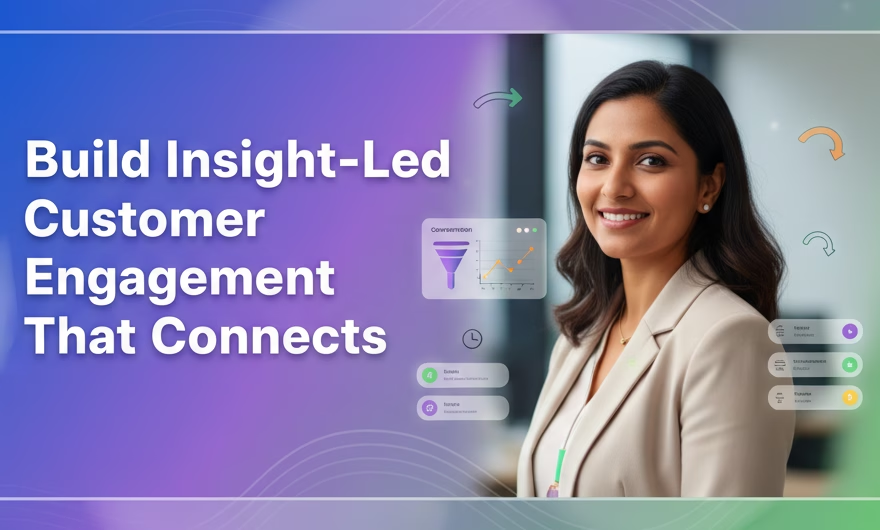
The answer lies in the missing link between raw data and actionable insights. Many businesses struggle to move from simply collecting customer information to turning it into strategies that resonate. Insight-led engagement is about interpreting what you already have in smarter, more human ways.
A Quick Guide to Building an Insight-Led Customer Engagement Strategy
Creating an insight-driven engagement approach isn’t something you implement overnight. It requires intentional restructuring, collaboration across departments, and a culture that values data-informed decisions. Here’s how you can begin shaping that foundation:
1. Start by Cleaning and Centralising Your Data
Your insights are only as reliable as the data they’re built on. If you’re working with outdated, scattered, or duplicated customer information, your entire engagement strategy is already at risk. One of the biggest culprits is data silos.
When customer data is stored across disconnected platforms or departments, you miss the chance to see the full picture. A unified, centralised data environment where marketing, sales, and customer support teams can collaborate, lays the groundwork for a consistent customer experience and accurate insights.
2. Build Collaborative Processes Around Data
Data centralisation should go hand-in-hand with cross-functional collaboration. Insight-led strategies thrive when multiple teams contribute their observations and inputs, refining the customer profile with every interaction.
You can think of each department as holding one piece of a customer puzzle. Only when these pieces come together can you design truly personalised experiences that reflect what your customers want, need, and expect at different moments.
3. Identify High-Value Customer Insights
Insight-led engagement goes beyond basic demographics. You’ll want to identify three core categories:
- Customer Insights: Preferences, lifestyle, behavioural patterns, product affinity, brand sentiment, lifetime value, etc.
- Journey Insights: Stage in the buyer journey, pain points, churn risk, previous interactions, drop-off triggers.
- Campaign Insights: Best-performing messages, channels, timings, open rates, conversion paths.
You can begin to see trends that help shape proactive, context-aware communication by tracking these layers.
4. Move from Segmentation to Hyper-Personalisation
While traditional engagement groups people by surface-level similarities, insight-led engagement goes deeper. It treats every customer as a unique individual rather than just another data point in a category.
Hyper-personalisation uses real-time, granular data to deliver relevant messaging, tailored product recommendations, and contextual offers when they matter. This approach builds trust, anticipation, and connection with your brand. Leveraging solutions like AI chatbots can further automate and personalise interactions at scale.
5. Invest in a Customer Engagement Platform (CEP)
To bring all of this to life, you need a solid tech foundation. A modern Customer Engagement Platform (CEP) acts as the central hub for all your customer data. It analyses the data, draws patterns, and enables delivery of personalised content across channels. Platforms that support omnichannel contact center capabilities ensure communication remains seamless, no matter where your customers are.
These platforms are powered by AI, machine learning, and automation tools that help create dynamic customer journeys. With the right CEP, every interaction can be contextually relevant, deeply personal, and rooted in real-time intelligence.
Conclusion
Insight-led customer engagement can transform how customers perceive your brand. Leaning on insights rather than assumptions allows you to understand, not just communicate. In an age where relevance is everything, using insights to guide your engagement is essential.