+91-808 8919 888

 CX
CX  January 8, 2025
  2 mins read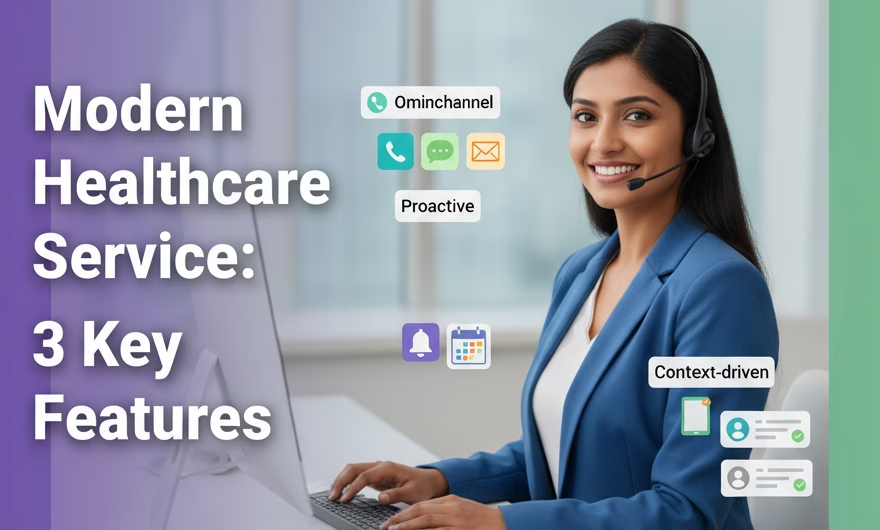






Healthcare needs and preferences have evolved over time. Nowadays, patient choices are influenced by treatment quality and how easily they can interact with healthcare providers. As digital awareness grows, so do customer expectations. Patients now expect care that is clinically excellent, accessible, responsive, and user-friendly across multiple channels.
Whether it’s a digitally-savvy user who prefers managing everything through a mobile app or a senior citizen who feels more confident speaking directly to a service representative, modern healthcare providers must cater to all. This means balancing automation with empathy, speed with accuracy, and convenience with trust.
To meet this growing complexity, healthcare organisations must reimagine their service approach. An essential shift is required in customer service models to ensure inclusivity for every patient experience.
1. Ensure a Connected Experience Across Channels
Patients reaching out to healthcare providers are often under stress, which makes consistency across service channels more important than ever.
When experiences vary between platforms (say, from a website to a helpline), it can leave patients feeling confused, neglected, or even mistrustful of the provider’s professionalism.
Imagine a patient begins booking an appointment online but later shifts to a phone call for assistance. If the phone agent lacks context about the online interaction, it forces the patient to repeat everything. Unfortunately, this disconnect happens often when different communication platforms are managed in silos.
Healthcare providers can unify all interactions by adopting a true omnichannel approach, whether from web, chat, email, phone, or app into one coherent view. This empowers representatives with the full context of a patient’s history, enabling them to resolve issues faster and more empathetically.
2. Adopt a Proactive Engagement Model
In healthcare, timing can be everything. Staying one step ahead in communication is essential. Proactive engagement involves reaching out to patients before they even realise they need assistance.
- Reminders about upcoming appointments
- Follow-ups on test results
- Helpful information related to visits
Sending tailored messages via SMS campaigns, email, or voice calls improves engagement, reduces missed appointments, and lowers last-minute rescheduling chaos. It also helps patients feel genuinely cared for—not just contacted when something goes wrong.
For healthcare providers, this approach translates into smoother workflows, better resource allocation, and stronger relationships with returning patients.
3. Build Rich, Context-Driven Interactions
Every patient interaction holds valuable insights—provided it’s captured and used meaningfully. Healthcare providers need to connect the dots across all touchpoints, creating a clear and complete view of the patient’s journey.
When service representatives have access to this holistic view (covering previous appointments, concerns, feedback), they can offer more accurate, timely, and empathetic responses. This resolves issues faster and shows patients that they’re being heard and remembered.
Modern contact center technology plays a vital role here. It allows you to equip teams with real-time access to relevant data and intelligent routing. As a result, it transforms basic transactions into thoughtful, human-centred conversations.
Since trust and care are everything in healthcare, such interactions can be the difference between a one-time patient and a lifelong one.

A marketing automation enthusiast at Exotel, passionate about building data-driven workflows that power smarter customer engagement. I bridge the gap between marketing and technology turning campaigns into scalable, automated systems that drive real business impact. When I’m not optimizing lead funnels or setting up automation flows, you’ll find me writing about customer experience, martech trends, and the future of communication on the Exotel blog.