+91-808 8919 888

 CX
CX  December 19, 2025
  3 mins read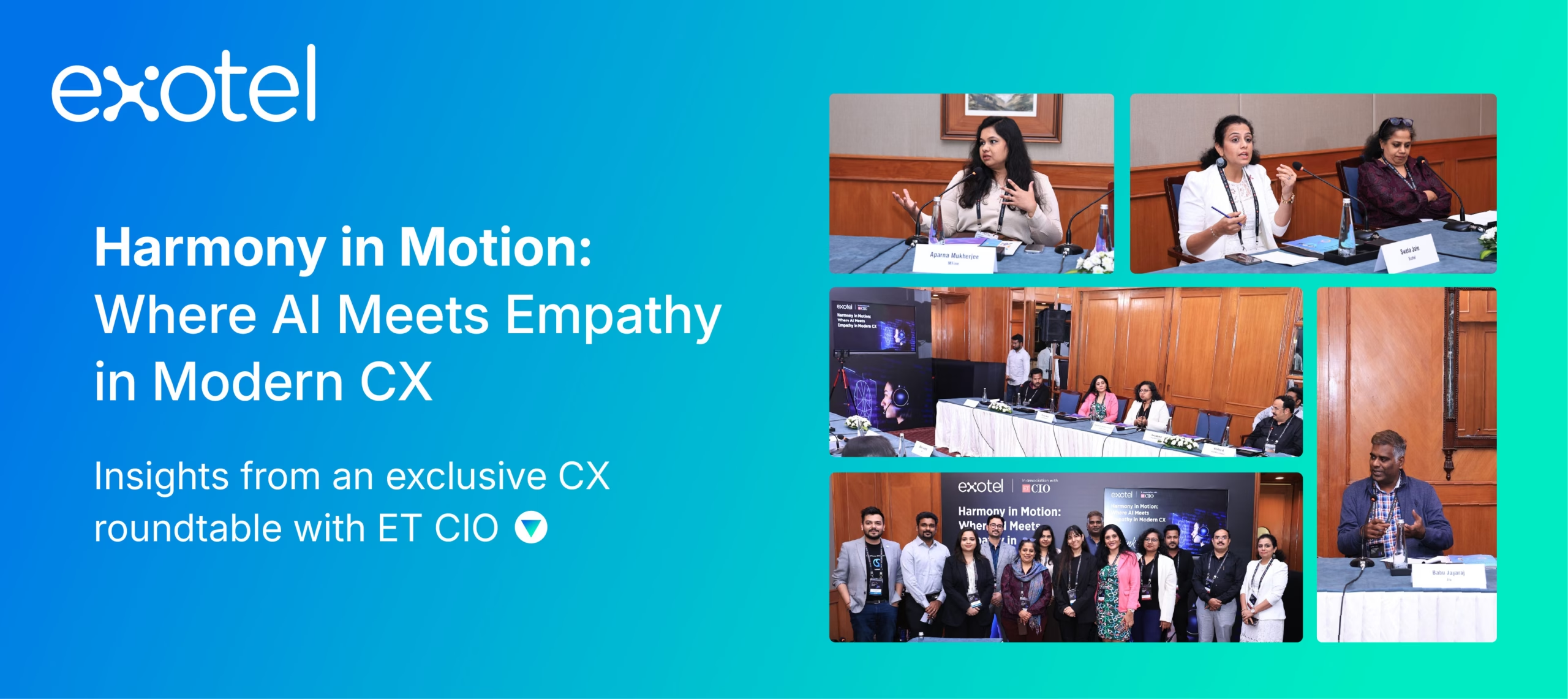






Insights from an exclusive CX roundtable with ET CIO
Last evening, we had the opportunity to host an exclusive CX roundtable with ET CIO, an evening filled with insightful conversations and thought-provoking discussions on the evolving role of AI in customer experience.
What made this roundtable particularly meaningful was the diversity of perspectives in the room. CX leaders from retail, healthcare, and enterprise technology came together, each bringing their own lens shaped by industry realities, customer expectations, and operational complexity.
The theme, “Harmony in Motion: Where AI Meets Empathy in Modern CX,” sparked an honest dialogue around a question every enterprise is grappling with today:
How do we scale customer experience with AI, without losing the human touch that customers value most?
The discussions moved beyond theory. Leaders shared real experiences, what’s working, what’s broken, and where expectations from AI often exceed reality. This blog captures the most powerful insights from that conversation.
AI Is Not the CX Strategy. It’s the Enabler.
One point found unanimous agreement early in the discussion:
AI is already part of CX. This is no longer a future-state conversation.
AI is proving highly effective in:
- Improving First Response Time (FRT)
- Resolving high-volume, low-complexity queries
- Powering analytics, insights, and backend efficiency
However, expecting AI to replace human empathy is where CX strategies begin to falter.
A recurring insight from the roundtable was the clear distinction between queries and complaints. While AI can efficiently handle queries, complaints demand understanding, judgment, and emotional intelligence, qualities that remain deeply human.
Empathy Cannot Be Scripted
One of the strongest statements echoed during the discussion was simple yet powerful:
Following a script is not empathy.
Even the most advanced bots struggle when:
- Customers are emotionally distressed
- Journeys break mid-way
- Trust has already been compromised
Healthcare emergencies, flight disruptions, and high-value retail purchases are not moments for rigid automation. These are moments where human intervention is not optional, it is expected.
AI can assist by providing context, summarising history, and enabling faster responses. But emotional resolution must come from humans.
Broken Journeys Matter More Than Bad Bots
Another theme that surfaced repeatedly was this:
Most CX challenges are not AI problems, they are journey problems.
Organizations continue to struggle with:
- Fragmented customer data
- Disconnected touchpoints across voice, chat, email, and in-store interactions
- Lack of a single, trusted view of the customer
Without consolidating data and stitching journeys end-to-end, even the most sophisticated AI systems operate in silos.
As one speaker aptly noted:
“Every metric is irrelevant until the focus shifts from achieving numbers to actually improving experiences.”
Context Is the New Currency of CX
If one idea tied the entire discussion together, it was context.
Modern customer experience depends on:
- A unified, 360-degree view of the customer
- Consent-driven use of customer data
- Visibility into previous interactions, escalations, and sentiment
AI plays a crucial enabling role here, not as a replacement, but as an assistant. It helps:
- Understand intent
- Decide when human intervention is required
- Equip agents with complete context so customers don’t have to repeat themselves
More context leads to faster resolutions, stronger trust, and better human conversations.
Automation vs Humanisation at Scale
The discussion did not frame the future of CX as AI versus humans. Instead, it focused on clear role definition and orchestration.
AI delivers the most value when used for:
- First-level responses
- Operational automation
- Pattern recognition and analytics
- Backend enablement for frontline teams
Humans remain irreplaceable when it comes to:
- Emotional interactions
- High-stakes decisions
- Crisis management
- Relationship-driven moments
The future of CX lies in designing systems where AI handles speed and scale, while humans deliver empathy and judgment.
Trust, Consent, and the Emotional Layer of AI
An important concern surfaced clearly during the roundtable:
AI still evokes hesitation and fear among customers.
Trust doesn’t come from intelligence alone. It comes from:
- Transparency in how data is used
- Explicit customer consent
- Assurance that personal information is protected
Whether it’s OTP sharing, identity verification, or proof of purchase, customers want control. Addressing this emotional layer is just as critical as improving efficiency.
Redesigning SOPs for an AI-Assisted World
AI adoption is not just a technology decision, it’s an operational one.
CX leaders emphasized the need to:
- Redesign SOPs for seamless AI-to-human escalations
- Train teams to handle second-level interactions with greater sensitivity
- Ensure agents receive complete customer context, not fragmented tickets
When AI and humans are thoughtfully stitched together, the experience improves, not just for customers, but for CX teams as well.
The Real Takeaway: Human + AI in Harmony
The evening concluded with a shared understanding:
The future of customer experience isn’t about choosing between AI and humans.
It’s about designing harmony between the two.
AI will continue to evolve.
But empathy, trust, and understanding remain fundamentally human.
The organizations that succeed will be those that:
- Fix broken journeys before scaling automation
- Use AI to empower—not replace—their teams
- Design CX with both intelligence and intent
That is what Harmony in Motion truly stands for.

Certified by HubSpot and Google, I’m a B2B SaaS marketer with 12+ years of experience building scalable marketing engines across content, demand generation, product marketing, and GTM strategy. I’ve helped grow CRM and CX platforms by driving organic growth, improving SQL conversions, and accelerating pipeline across global markets including UAE, KSA, APAC, Africa, and the USA. I believe in human-first messaging, revenue-linked strategy, and building systems that scale.