+91-808 8919 888

 CX
CX  January 9, 2025
  4 mins read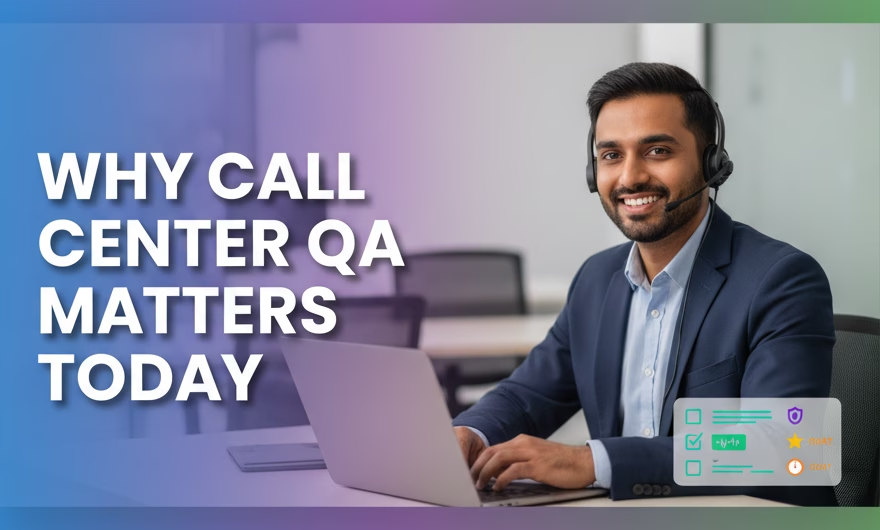






Think about the last time you called a customer support helpline. Maybe it was to get help with a product that stopped working, or to follow up on a delayed order. In that moment, what mattered most wasn’t the brand’s advertising or how great their website looked. It was how the person on the other end handled your concern.
A single call can shape a customer’s entire perception of a company. On the other hand, every interaction is a chance to either build loyalty or lose it for the business. What happens during those few minutes on a call isn’t just about solving a problem. It’s about how well you do it every single time.
This is where call center quality assurance comes in. It’s an ongoing effort to ensure every conversation (no matter who handles it or when) is up to the mark. When done right, it helps create consistency, improves agent performance, keeps customers happy, and ensures your business isn’t slipping through the cracks on service quality.
So, what exactly does quality assurance look like in a call center? Why is it such a critical part of customer service today? Let’s break it all down.
What Does Call Center Quality Assurance Really Mean?
At its core, call center Quality Assurance (QA) is about ensuring every customer receives a standard of service that reflects your brand’s values. It involves actively reviewing agent interactions to see whether customer expectations are being met in terms of responsiveness and quality of resolution.
Managers can identify strengths, flag recurring issues, and coach their teams to do better by observing real-time or recorded calls. With the right tools in place, this process becomes less about micromanagement and more about empowering agents to perform at their best.
Why Does Quality Assurance Matter More Than Ever?
Since people have options in the current hyper-connected world, they’ll take them if they don’t feel valued. This makes quality assurance not just a nice-to-have, but a core pillar of customer retention, trust, and operational success. Here’s why it’s essential:
- It Helps Standardise Quality Across the Board
Quality assurance ensures that key soft skills (like empathy, listening, and clarity) aren’t left to chance. Instead, they become part of the culture. Over time, agents naturally adopt best practices and make service delivery more consistent and reliable. - It Keeps You on the Right Side of Compliance
Call centers often deal with sensitive data, including billing details and personal identification. QA helps ensure conversations stay within legal and regulatory boundaries. This reduces the risk of violations and protects both customers and business. - It Improves the Customer Journey
The faster and more effectively an issue is resolved, the better a customer feels about the interaction. QA helps you maintain this level of responsiveness by flagging inefficiencies and spotting areas that need improvement. This results in a smoother, more satisfying customer experience. - It Strengthens Customer Loyalty
Retaining an existing customer is far more cost-effective than acquiring a new one. QA becomes a silent but powerful force behind long-term loyalty and repeat business by making customers feel heard and cared for on every call. - It Drives Smarter Metrics
You can’t improve what you don’t measure. QA makes it easier to track call quality indicators, such as resolution time, customer sentiment, or adherence to scripts. As a result, you can fine-tune your strategies and see real performance gains.
Practical Ways to Improve Call Center Quality
Delivering high-quality customer interactions is the benchmark for call centers that defines whether customers stay or walk away. Every call is an opportunity to either build trust or lose it. That’s why improving call center quality requires establishing a culture where consistency, empathy, and accountability are woven into everyday operations.
Here are a few tried-and-tested approaches that can help elevate the quality of customer interactions and reinforce long-term retention:
- Prioritise the Full Caller Experience
Managers need to listen to entire interactions to truly understand how an agent handled the conversation. A partial review may overlook subtle cues, such as tone, empathy, or problem ownership, that define whether an interaction left a positive impression. - Emphasise First-Time Resolution
Customers reach out with a specific problem and expect it to be resolved without unnecessary back-and-forth. Agents should be trained to take full ownership of the call, even if it means escalating the issue or connecting the customer to another department. What matters is ensuring the customer leaves with a clear path to resolution. - Bring Agents Into the Quality Process
A quality assurance system works best when agents aren’t kept in the dark. They should know that script adherence, first-call resolution, or customer satisfaction are used to evaluate them. You can use sample calls to illustrate what good, average, and subpar calls sound like. Involving agents in these discussions also helps uncover roadblocks and opportunities for improvement. - Encourage Self-Evaluation
Let agents spend some time each week reviewing their individual calls. When they hear themselves in action, they often become more aware of how they can improve tone, pace, and problem-solving. Self-assessment encourages accountability and continuous self-improvement without external pressure.
Tools That Can Sharpen Call Center Quality Monitoring
- Voice Logging
Call recordings can be a goldmine for learning. They give teams real-life examples of customer scenarios, highlight best practices, and help identify gaps.
Voice logs also double up as compliance evidence in case of disputes, since every interaction is documented clearly. - Call Snooping
Sometimes, the best feedback comes when no one knows they’re being watched. Snooping lets supervisors silently monitor live calls without interrupting. It’s a great way to gauge real-time performance and understand how agents handle tough conversations. - Call Whispering
Whispering comes into play when an agent is mid-conversation and needs a little help. Supervisors can offer real-time coaching while the customer remains unaware. This supports agents in tricky moments, boosts confidence, and provides on-the-job learning. - Call Barging
Supervisors can step in directly and take over the call in high-stress situations where an agent struggles. Barging is a last-resort feature. When used wisely, it ensures the customer issue is resolved efficiently without compromising the experience.
At its core, call center quality assurance is about creating a space where agents feel supported and customers feel heard. When done right, it becomes a silent driver of brand reputation and shape how your business is remembered long after the call ends.

A marketing automation enthusiast at Exotel, passionate about building data-driven workflows that power smarter customer engagement. I bridge the gap between marketing and technology turning campaigns into scalable, automated systems that drive real business impact. When I’m not optimizing lead funnels or setting up automation flows, you’ll find me writing about customer experience, martech trends, and the future of communication on the Exotel blog.