+91-808 8919 888

 CX
CX  January 21, 2025
  5 mins read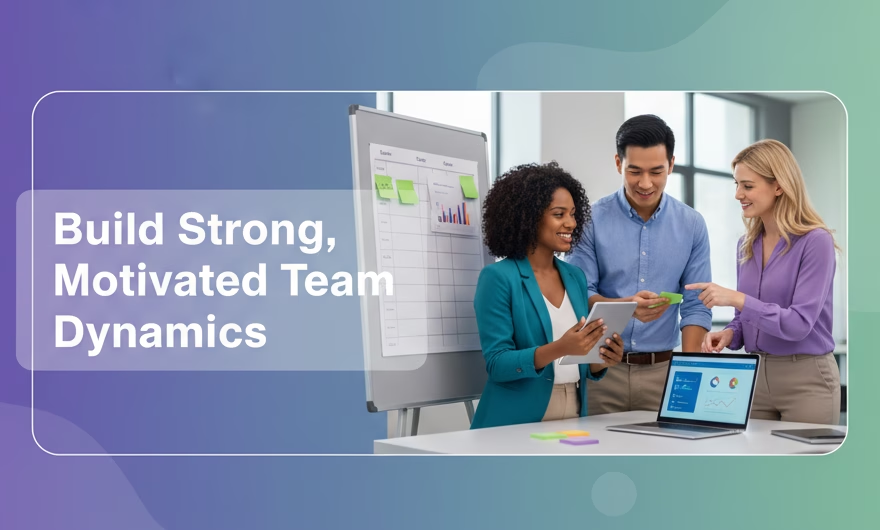






In workplace discussions, one of the most common topics is team dynamics. In an organization, teams work together towards achieving the company goals as well as their own personal targets. Therefore, working in a team is an integral part of delivering business goals. Each idea, comment, feedback, and disagreement is vital to the team’s growth and development. This is how common goals are achieved and individual employees grow by being a part of their teams.
However, many times teams feel unmotivated and the general morale is low. How can managers ensure that their teams do not suffer from a lack of motivation? How do they keep the morale high so that the business does not suffer? If employees are not in a balanced state mentally, their work will suffer due to lack of concentration, frustration, and irritation at factors which may be personal or professional. Here are some ways which help build team dynamics and strengthen Workforce Team Dynamics across on-site, remote, and hybrid teams:
Practices to strengthen team dynamics
- Take your team out for lunch or dinner: Socializing with colleagues in a non-work environment helps your team know each other better. This is important because when one employee fails to achieve their goals, the team can pool in and help the colleague deliver their goals. Camaraderie and friendship are important for good team dynamics as it keeps the team happy. For hybrid and distributed teams, replicate this with virtual coffees, game hours, or periodic in-person meetups to maintain connection.
- Set a clear, shared purpose: Teams perform best when they understand why their work matters. Tie daily tasks to customer outcomes and organizational goals. Keep the team’s purpose visible in sprint boards, planning docs, and kickoff meetings so decisions align with the “north star.”
- Create psychological safety: People need to feel safe to speak up, ask questions, and admit mistakes without fear of blame. Encourage curiosity, model vulnerability as a manager, and explicitly thank teammates for raising risks early. Over time, this openness accelerates learning and strengthens Workforce Team Dynamics.
- Define roles, responsibilities, and norms: Ambiguity breeds friction. Clarify who owns what, who is consulted, and how handoffs work. Co-create team norms covering response times, meeting etiquette, documentation standards, and decision-making so expectations are shared and fair.
- Improve communication cadences: Establish a predictable rhythm of standups, weekly check-ins, and monthly retrospectives. Use standups to unblock work, one-on-ones for coaching, and retros to inspect and adapt how the team collaborates—celebrating what works and addressing what doesn’t.
- Balance workloads with smart scheduling: Uneven workloads erode morale. In workforce management, use capacity planning, fair shift assignments, and realistic SLAs to protect focus time and prevent burnout. Rotate high-intensity tasks and ensure coverage plans so no one is “always on.”
- Recognize progress frequently: Recognition does not need to be grand to be meaningful. Call out specific behaviors and outcomes—how someone helped a peer, fixed a recurring issue, or improved a process. Peer-to-peer recognition in team channels builds a culture of appreciation.
- Give actionable, timely feedback: Make feedback regular, specific, and focused on behaviors and impact. Use short feedback loops—after a call, demo, or incident—to help skills stick. Invite feedback about your leadership as well to model continuous improvement.
- Invest in upskilling and peer learning: Build capability through lunch-and-learns, shadowing, and pair work. Rotate facilitation roles and let team members present mini-sessions on tools or customer insights. When people teach, confidence and cohesion grow.
- Encourage healthy conflict and clear decisions: Good teams disagree productively. Normalize surfacing dissent early, use structured debates when stakes are high, and clarify who is the final decision-maker. Document decisions and revisit them when new data emerges.
- Foster inclusion and diverse perspectives: Invite input from quieter voices by round-robin check-ins or written brainstorms before meetings. Rotate meeting times for global teams and share agendas early so everyone can prepare. Inclusion improves creativity and team resilience.
- Protect focus and reduce noise: Limit unnecessary meetings, set “no-meeting” blocks, and agree on which channels are for urgent vs. non-urgent messages. Deep work windows help teams deliver quality outcomes faster and with less rework.
- Align goals and metrics the team can influence: Choose team KPIs that reflect collective output, not just individual heroics. For customer-facing teams, balance volume metrics with quality measures such as first-contact resolution and CSAT. Review metrics together to drive joint problem-solving.
- Onboard with connection, not just checklists: Pair new hires with buddies, introduce them to cross-functional partners, and share the team’s rituals and norms. Early connection reduces ramp time and accelerates contributions to team goals.
- Use rituals to build identity: Simple rituals—wins of the week, demo days, or “failure fridays” to share learnings—create shared memories and trust. Keep them short, consistent, and purposeful so they energize rather than drain.
- Make collaboration tools work for the team: Standardize workspaces, templates, and naming conventions so information is easy to find. Agree on where decisions live and how to request help. Tool clarity reduces friction and speeds up handoffs.
- Connect cross-functionally with intent: Bring adjacent teams into planning early to avoid surprises. Define joint success metrics and review interdependencies frequently. Strong external relationships reduce bottlenecks and improve delivery.
- Address friction quickly and fairly: Don’t let small frustrations fester. When tensions arise, listen to understand, restate shared goals, and align on next steps. Follow up to ensure agreements stick. Swift, fair resolution preserves trust.
- Support wellbeing proactively: Normalize breaks, encourage use of leave, and watch for signs of overload. Offer flexibility when possible and create space for people to manage personal obligations. Healthy teams sustain performance over time.
- Lead by example: Managers set the tone. Be punctual, prepared, and consistent. Share context generously, give credit, and own mistakes. When leaders model the behaviors they expect, teams mirror them.
- Run effective meetings: Send agendas in advance, define outcomes, assign owners, and recap decisions with action items. Invite only necessary participants and end early when objectives are met. Respect for time signals respect for people.
- Leverage pulse checks to listen: Short, regular pulse surveys and open forums surface what’s helping or hindering collaboration. Share the results and commit to one or two improvements each cycle so people see action, not just questions.
- Celebrate team milestones, not just individual wins: Mark releases, successful campaigns, or service-level streaks with team acknowledgments. Tie celebrations back to the impact on customers and the business to reinforce purpose.
- Keep documentation lightweight and living: Maintain concise playbooks, runbooks, and FAQs for common workflows. Encourage team edits and keep docs close to the work. Shared context reduces rework and onboarding time.
- Plan capacity with seasonality in mind: For operations and support teams, anticipate peaks and staff accordingly with flexible coverage, cross-training, and clear escalation paths. Preparedness lowers stress and improves customer outcomes.
- Promote autonomy with guardrails: Trust people to make decisions within clear boundaries. Define thresholds for when to escalate and when to proceed. Autonomy boosts ownership, while guardrails maintain consistency.
- Make values visible in daily work: Connect behaviors to company values during reviews and shout-outs. When values guide choices—prioritization, trade-offs, customer handling—teams align faster and avoid unnecessary conflict.
- Be intentional about hybrid norms: For distributed teams, decide together how to use office days, how to include remote participants, and when to default to asynchronous updates. Meeting equity—good audio/video, shared docs, and facilitation—keeps everyone engaged.
- Continuously improve your workflows: Treat the way you work as a product. Run small experiments—change a handoff step, tweak a template, or adjust meeting frequency—and measure the effect. Incremental improvements compound into major gains.
- Reinforce accountability with kindness: Hold commitments visible and follow through on deadlines. When misses happen, focus on learning and prevention rather than blame. This mix of standards and support strengthens trust and results.
The bottom line
When leaders prioritize these practices, Workforce Team Dynamics shift from being a soft, abstract concept to a concrete driver of performance. The outcome is not just happier teams, but faster decisions, fewer handoffs gone wrong, and a more resilient organization.
Ultimately, strong team dynamics don’t happen by accident—they are designed, practiced, and protected. Start with clarity of purpose and psychological safety, add consistent routines and fair workload management, and nurture relationships along the way. Do this well, and your teams will not only hit their numbers—they’ll grow, innovate, and thrive together.

A marketing automation enthusiast at Exotel, passionate about building data-driven workflows that power smarter customer engagement. I bridge the gap between marketing and technology turning campaigns into scalable, automated systems that drive real business impact. When I’m not optimizing lead funnels or setting up automation flows, you’ll find me writing about customer experience, martech trends, and the future of communication on the Exotel blog.