+91-808 8919 888

 CX
CX  January 15, 2025
  4 mins read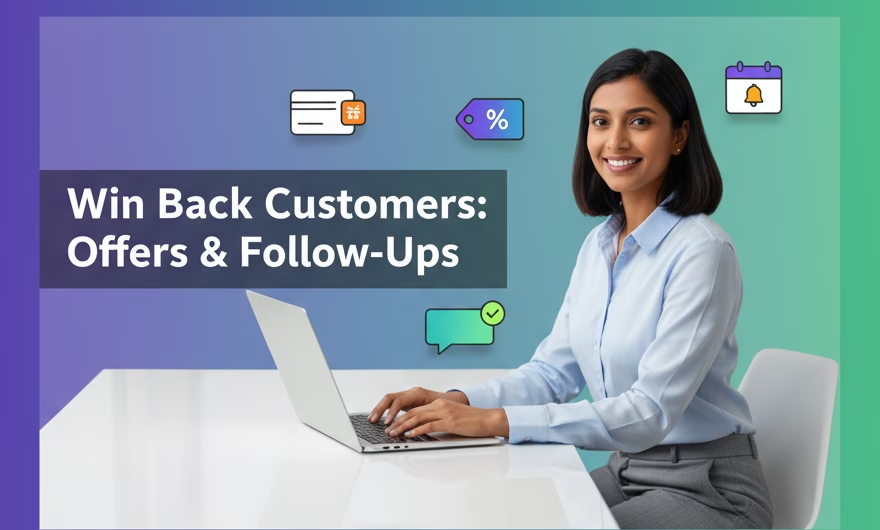






Winning back lost customers requires strategic, personalized approaches that demonstrate appreciation, make amends, and maintain ongoing communication. When customers lapse, the most effective path back combines a sincere acknowledgment of their experience with targeted value and timely, respectful follow-ups. Below are two proven strategies that, when executed well, consistently help businesses win back lost customers without eroding brand equity or margins.
1. Make up for your loss with a special offer
While offering discounts to every lost customer is impractical, selectively providing special offers like discount cards, fee waivers, free upgrades, or small gifts can significantly enhance engagement with valuable customers. The goal is not to train customers to expect discounts, but to demonstrate that you recognize their value and want to make things right. Personalized outreach accompanied by a thoughtful offer shows individual attention in an era dominated by impersonal mass marketing and can drive meaningful reactivation.
Make the offer feel like a sincere apology and a fresh start:
- Lead with empathy: Acknowledge the lapse or the reason they left (where known) and express appreciation for their past business.
- Tailor by customer value: Use RFM (recency, frequency, monetary) or CLV segments to decide who receives which offer, ensuring your highest-value customers get the richest make-good.
- Offer types that preserve value: Consider bundled value (e.g., an upgrade for the first month), credit toward future purchases, or free expedited service instead of across-the-board discounts.
- Time-bound but fair: Set a reasonable redemption window to prompt action without pressuring customers. Make redemption frictionless with one-click coupons or unique codes.
- Highlight what’s changed: If you’ve improved quality, added features, or fixed pain points, pair the offer with a brief note explaining the improvements.
Execution details that improve results:
- Personalize the message: Reference the last product purchased, a past support interaction, or their preferred channel. Keep the tone helpful, not salesy.
- Choose the right channel: Send offers via the customer’s preferred medium—email, SMS, WhatsApp, or a courteous outbound call for top-tier customers. Reinforce with in-app messages when relevant.
- Protect margins and brand: Use tiered incentives and set caps. Avoid repeated deep discounts that attract bargain hunters without long-term retention.
- Test and learn: A/B test subject lines, offer values, and timing. Use holdout groups to measure true lift versus organic reactivation.
- Automate with rules: Trigger win-back offers after defined inactivity windows or after a resolved complaint, with logic that stops the flow once the customer re-engages.
What to avoid:
- Generic, one-size-fits-all discounts: These can feel impersonal and may not address the underlying reason for churn.
- High-friction redemption: Requiring calls to redeem, hidden terms, or restrictive exclusions undermines goodwill.
- Over-communication: Repeated reminders about the same offer can feel pushy; set frequency caps.
Metrics that prove impact:
- Redemption and reactivation rate: Track how many recipients redeem the offer and return to purchase or use the service.
- Incremental revenue and margin: Measure lift versus a control group and include costs of incentives to understand true ROI.
- Time to second purchase: Ensure reactivated customers continue engaging beyond a single redemption.
- Post-reactivation churn: Monitor retention of won-back customers to validate long-term value.
2. Stay in touch
Customers may not always respond positively to attempts at re-engagement on the first try, but persistence with respect is essential. Maintaining a dedicated win-back communication track tailored to customers’ previous purchase patterns and reasons for leaving is a cost-effective way to keep the relationship alive. Every message should include a clear, easy way to opt out to respect preferences and protect your brand reputation.
Build a thoughtful win-back journey, not a single email:
- Segment by reason and value: Separate those who left due to price, product fit, service issues, or life events. Tailor messaging and offers accordingly, prioritizing high-CLV segments.
- Acknowledge and update: Start with a simple “we miss you” note that acknowledges their absence and highlights improvements or new benefits since they left.
- Cadence with care: Use a short series (e.g., 3–5 messages over 30–45 days) rather than a barrage. If there’s no response, pause and try a lighter check-in later.
- Mix your value: Alternate between helpful content (how-to tips, usage reminders), social proof (case studies, ratings), and an incentive when warranted.
- Use preferred channels: Email for detail, SMS/WhatsApp for timely nudges, and a considerate voice follow-up for high-value accounts or unresolved issues.
Respect, consent, and deliverability:
- Unsubscribe everywhere: Include a visible opt-out link or instruction in every promotional message and honor preferences promptly.
- Preference centers: Let customers choose topics and frequency. A lower-frequency option often saves the relationship.
- Compliance-first: Ensure all outreach follows local regulations for consent and messaging. Avoid sending to contacts who have withdrawn permission.
- Maintain list hygiene: Remove persistently inactive contacts after re-permission attempts to protect sender reputation.
Make the content feel personal and timely:
- Reference past value: Remind customers what they achieved or enjoyed with your product or service—saved time, cost reduction, convenience, or outcomes.
- Share what’s new: Feature recently added capabilities, policies, or services that directly address common reasons for churn.
- Invite dialogue: Ask a single, easy question like “What would bring you back?” and make it simple to reply. Close the loop on feedback you receive.
- Offer alternatives: If price was the issue, present flexible plans or pausing options rather than only discounts.
Operational practices that sustain momentum:
- Set clear exit and re-entry rules: Define when a customer moves from active to at-risk to churned, and when they graduate out of win-back once they return.
- Monitor channel-level performance: Optimize send times, templates, and call scripts based on response data.
- Create a feedback loop to product and service teams: Tag reasons for churn and feed insights back so the root causes are addressed.
- Measure beyond opens: Focus on reactivations, conversions, repeat usage, and long-term retention of won-back customers.
As you stay in touch, remember that silence can signal multiple things—lack of interest, timing mismatch, or channel fatigue. Treat non-response as a data point. Scale down frequency, switch channels, or pause gracefully with a “we’ll be here when you’re ready” message before making a final re-permission attempt. This balances persistence with respect and preserves goodwill.
These points emphasize the importance of selective incentives and continuous, respectful communication as effective tools to win back lost customers. By pairing a sincere, well-structured make-good with a considerate, multichannel win-back journey, you maximize the chance of reactivating high-potential customers without undermining your brand. Focus on empathy, personalization, and ease at every step—and measure what matters—so each outreach feels like a genuine invitation to return, not another broadcast. Done consistently, this approach not only brings customers back but also strengthens loyalty going forward.

A marketing automation enthusiast at Exotel, passionate about building data-driven workflows that power smarter customer engagement. I bridge the gap between marketing and technology turning campaigns into scalable, automated systems that drive real business impact. When I’m not optimizing lead funnels or setting up automation flows, you’ll find me writing about customer experience, martech trends, and the future of communication on the Exotel blog.