Real-time IP calling from your browser powered by WebRTC
Enable agents to make and receive high-quality IP calls directly from the browser. Boost productivity, simplify infrastructure, and scale customer conversations effortlessly.
25B+Interactions a year, trusted by the leading brands.









WebRTC calling built for modern CX teams
WebRTC enables real-time browser-based voice communication integrated with CRMs and web apps, allowing teams to place and receive calls instantly while improving agent productivity and CX.
Add WebRTC voice calling to your apps
Build browser-based voice calling across devices and networks using WebRTC with PSTN connectivity for seamless communication.
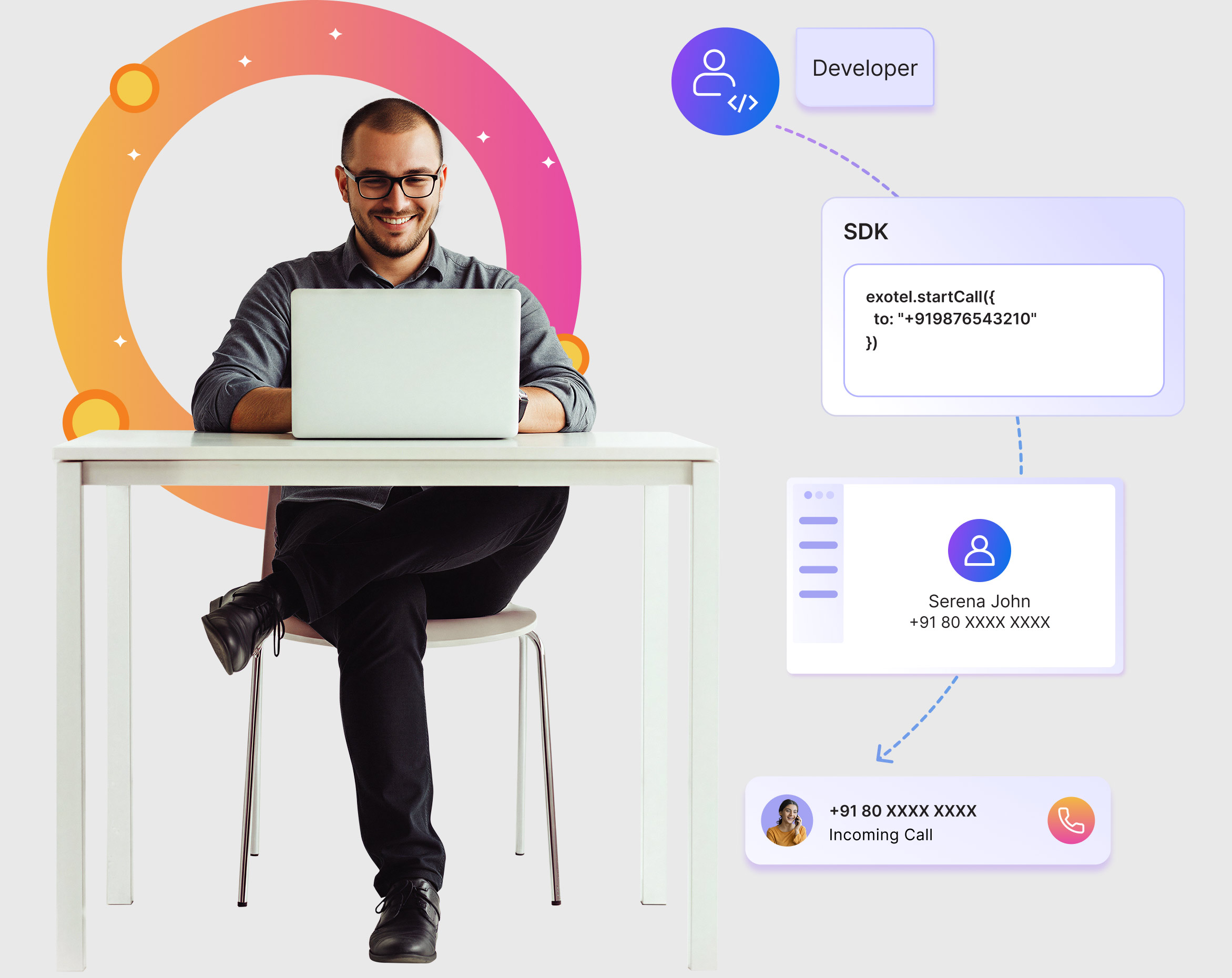
Integrate the WebRTC SDK into your applications to enable users to place and receive calls over IP from any browser or device while seamlessly connecting to PSTN networks for reliable voice delivery.
Create contextual calling experiences with real-time call pop-ups showing customer history, call logs, and interaction data
Use call event triggers and contextual data to surface caller information within your CRM or app interface so agents can view customer history and manage conversations with full context.
Ship WebRTC calling faster using extensive SDK documentation, integration guides, and dedicated developer support resources
Accelerate development with detailed SDK documentation, sample code, and technical guidance that helps teams quickly deploy browser-based calling within existing applications.
Drive measurable CX and cost outcomes with WebRTC browser calling

Enable browser-based calling
Allow agents to call from browsers directly, boosting productivity by up to 25%.
Empower true remote work
Let agents work from anywhere using browser calling, improving workforce flexibility.
Accelerate deployment cycles
Integrate WebRTC SDKs into apps and CRMs and deploy calling up to 60% faster.
Reduce telephony infrastructure
Replace desk phones and hardware with browser calling and cut infra costs by 35%.
Lower calling costs efficiently
Route calls via IP before PSTN and reduce telecom costs by up to 30%.
Improve agent productivity
Integrate calling into CRMs so agents manage calls faster with fewer context switches.
Scale voice operations easily
Handle growing call volumes without new hardware while maintaining call quality.
Build and launch voice calling in minutes
Deploy real-time calling in your apps with simple SDK integration.
Book a Demo
Browser calling integration FAQs
What is Exotel’s WebRTC SDK and how does it enable real-time browser-based voice calling within applications and CRMs?
Exotel’s WebRTC SDK enables developers to embed browser-based voice calling directly into apps or CRMs. It lets users place and receive VoIP calls over IP while seamlessly connecting calls to PSTN networks for reliable communication.
What are the prerequisites required for users to start making or receiving calls using Exotel’s WebRTC SDK in a CRM environment?
Users only need to log in to their CRM once without separately logging into Exotel. This authenticates the user and automatically initializes and registers the WebRTC SDK so they can place and receive IP-based calls.
What happens if a user cannot make or receive VoIP calls because of poor internet connectivity while using WebRTC calling?
If internet connectivity affects VoIP call quality, users can switch to PSTN calling using a toggle button. This converts the user’s mobile device into the primary calling device to ensure uninterrupted conversations.
Which browsers are supported for WebRTC-based calling when using Exotel’s WebRTC SDK across different operating systems?
WebRTC calling works on major browsers including Google Chrome, Mozilla Firefox, Microsoft Edge, and Safari (version 11 and above), depending on the operating system and browser compatibility.
Which operating systems are compatible with Exotel’s WebRTC SDK for enabling browser-based voice calling?
Exotel’s WebRTC SDK supports major operating systems including Windows, Linux, and macOS when used with supported browsers like Google Chrome, Mozilla Firefox, Microsoft Edge, and Safari.
Can developers integrate Exotel’s WebRTC SDK into existing CRM platforms or web applications to enable browser calling?
Yes. Developers can integrate the WebRTC SDK into existing CRMs or web applications to enable agents to place and receive calls directly within their workflow while accessing customer context and call data.