Make every SMS recognizable with branded sender ID masking
Use Exotel’s customizable 6-character sender ID masking to make every message instantly identifiable and launch bulk SMS campaigns in minutes.
25B+Interactions a year, trusted by the leading brands.









SMS masking and Its key business benefits
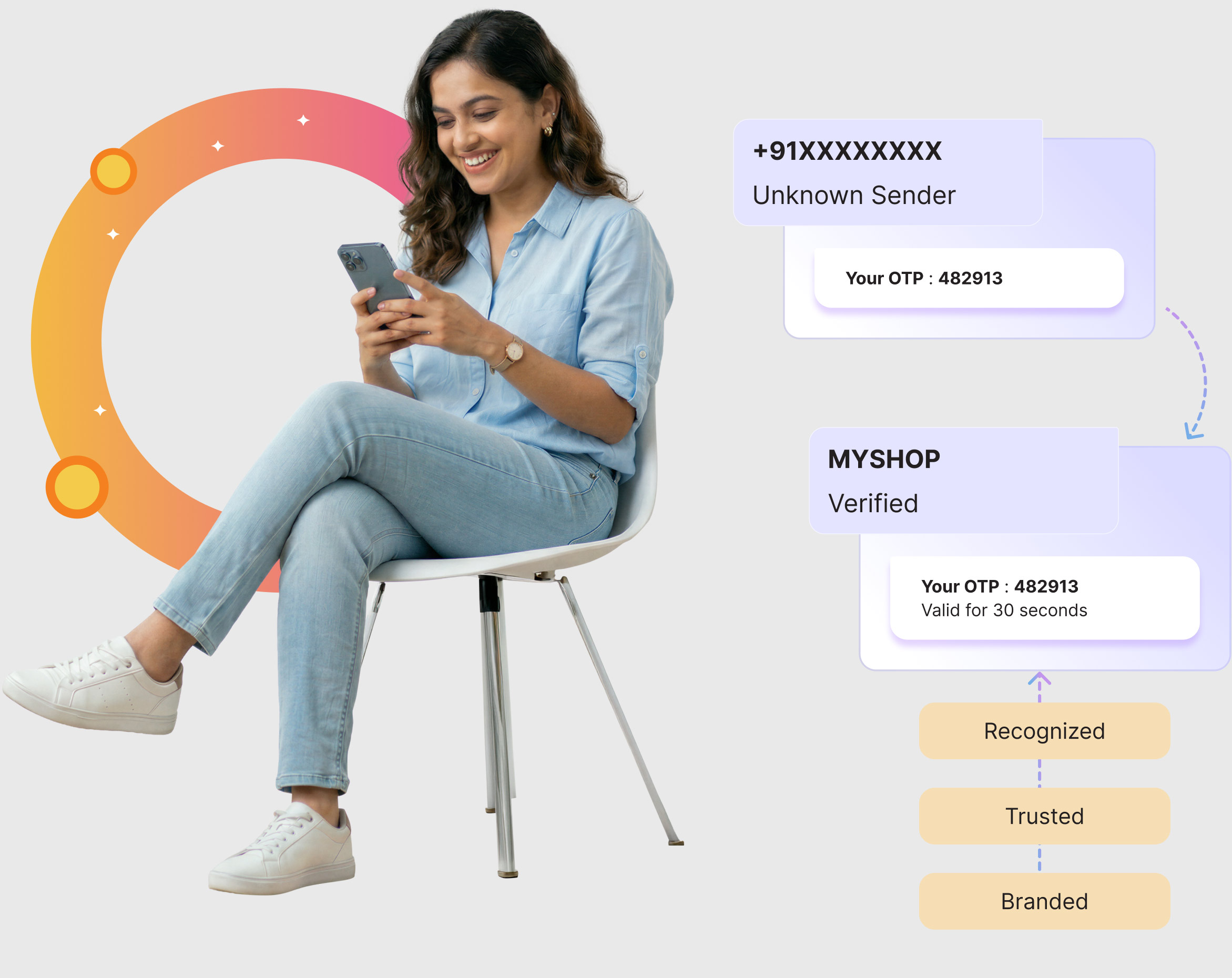
SMS masking replaces random numbers with a branded sender ID, making messages recognizable while improving trust, engagement, and control.

 Identifies the sender
Identifies the sender- Customers instantly know the SMS is from your brand
- Sender ID replaces unknown numbers with your brand
- Clear brand identification builds message credibility
- Reduces confusion caused by unfamiliar numbers
Identifies the sender- Customers instantly know the SMS is from your brand
- Sender ID replaces unknown numbers with your brand
- Clear brand identification builds message credibility
- Reduces confusion caused by unfamiliar numbers
 Improves brand awareness
Improves brand awareness- Reinforces brand visibility in every SMS sent
- Customers quickly recognize your brand name
- Builds familiarity through consistent sender ID
- Strengthens brand recall across campaigns
Improves brand awareness- Reinforces brand visibility in every SMS sent
- Customers quickly recognize your brand name
- Builds familiarity through consistent sender ID
- Strengthens brand recall across campaigns
 Increases customer engagement
Increases customer engagement- Branded messages encourage higher open rates
- Customers trust messages from known brands
- Familiar sender names drive better engagement
- Improves chances of customers reading SMS
Increases customer engagement- Branded messages encourage higher open rates
- Customers trust messages from known brands
- Familiar sender names drive better engagement
- Improves chances of customers reading SMS
 Enables one-way communication
Enables one-way communication- Prevent replies or calls to masked numbers
- Ideal for alerts, updates, and notifications
- Keeps communication controlled and simple
- Ensures messages remain purely informational
Enables one-way communication- Prevent replies or calls to masked numbers
- Ideal for alerts, updates, and notifications
- Keeps communication controlled and simple
- Ensures messages remain purely informational
Where SMS sender ID masking improves customer communication

Order & delivery updates
Send confirmations and delivery alerts with branded IDs customers trust.
Banking & transaction alerts
Notify customers of activity and payments using trusted branded sender IDs.
OTP & authentication messages
Deliver OTPs and verification messages with sender IDs users trust instantly.
Appointment reminders
Send confirmations and reminders with branded IDs to reduce missed visits.
Service notifications
Share updates, outages, and alerts using sender IDs that reflect your brand.
Promotional campaign updates
Send offers and campaign updates with branded IDs to boost engagement.
Subscription & renewal alerts
Notify renewals, billing, and plan updates using recognizable branded IDs.
Turn business SMS into branded messages
Configure sender IDs and start sending bulk SMS quickly.
Sign Up
SMS masking FAQs
What is SMS masking and how does it help businesses send branded messages to customers?
SMS masking replaces a phone number with a branded sender ID, allowing businesses to display their brand name instead of an unknown number. This makes messages instantly recognizable, improves trust, and ensures customers know who the communication is from.
What is a sender ID in SMS masking and why is it important for brand recognition?
A sender ID is the name that appears as the sender of an SMS message. With SMS masking, businesses can configure a unique sender ID that reflects their brand, helping customers instantly identify the message source and strengthening brand recall.
How does SMS masking improve SMS open rates and customer engagement?
When customers receive messages from a recognizable brand name instead of an unknown number, they are more likely to open and read them. SMS masking builds familiarity and trust, which helps improve engagement and overall communication effectiveness.
Can customers reply or call back to messages sent using SMS masking sender IDs?
SMS masking is typically used for one-way communication where the sender ID replaces the phone number. This prevents customers from replying or calling the number, making it ideal for alerts, notifications, OTPs, and other informational messages.
What are the common business use cases where SMS masking is typically used?
Businesses commonly use SMS masking for OTP delivery, banking alerts, order confirmations, delivery notifications, appointment reminders, promotional campaigns, and subscription updates where brand recognition and message trust are important.